Eco-A in conversation with Cherokee Leader Tom Belt
September 14, 2018
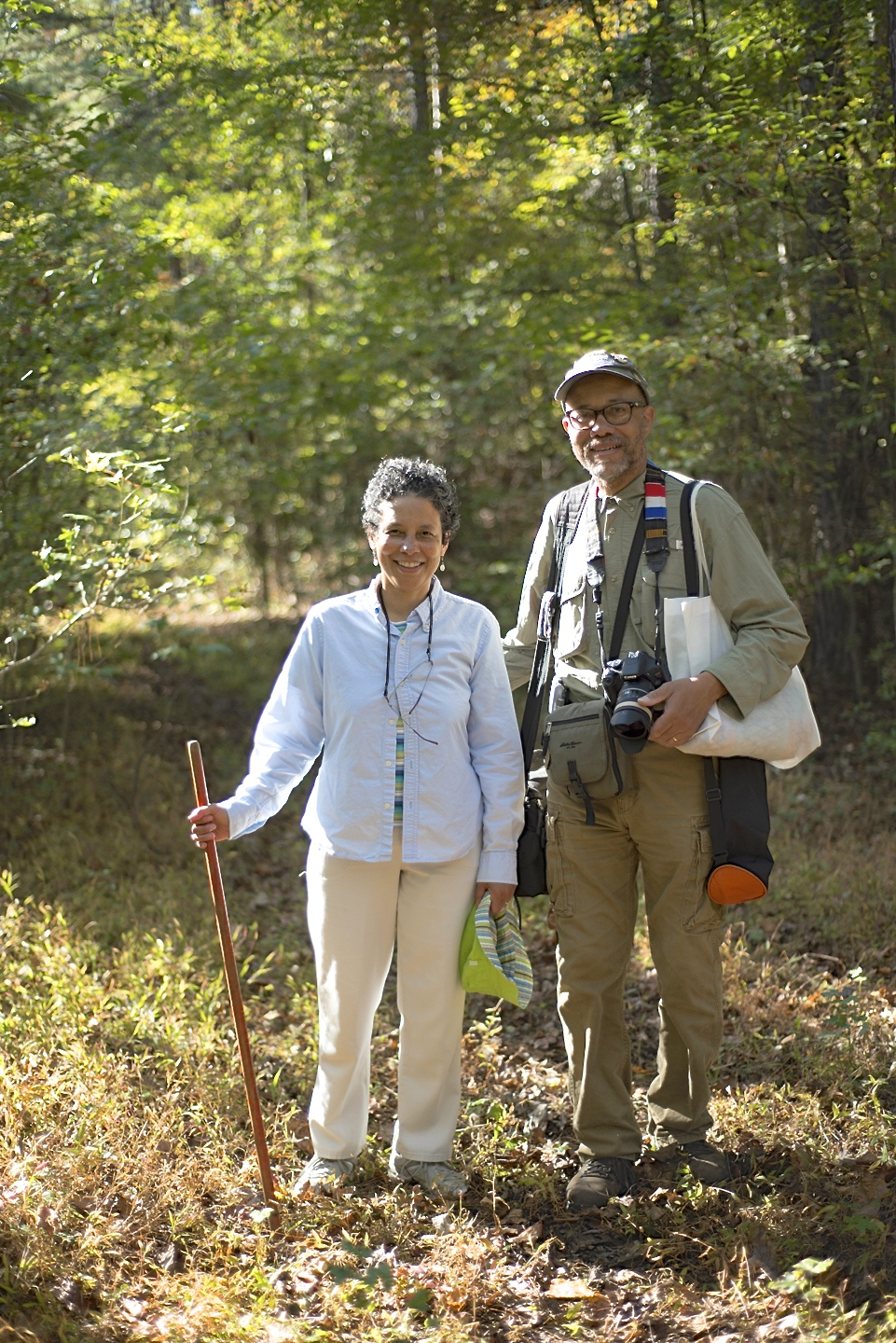
In conversation with Cherokee leader Tom Belt, and Cherokee National Forest Archaeologist and Tribal Liaison, Quentin Bass, on Eco-A’s outing to the Cherokee Kituwah site, near Bryson City, NC, July, 2018.
The following are notes made during Cherokee leader Tom Belt’s talk to us at Kituwah, and from his responses to questions by Eco-A attendees. Tom Belt is one of the Cherokee leaders focused on keeping Cherokee traditional culture alive and well. A few words here are direct quotes but most are paraphrased with care to the intent of the speakers and the original conversation. This is only a very small part of the words and ideas shared, and I have added a few notes for context in italics. Many thanks to Quentin Bass for arranging this special opportunity, and for sharing his deep knowledge about Cherokee and American history and culture in the Southeast. — Kathryn
Quentin Bass and Tom Belt:
The word “Cherokee” does not originate with those known as Cherokee today – the word came about because a Creek Indian guide traveling with DeSoto called the people living north of Creek territory the “Tsalagi,” meaning “people of a different speech.”
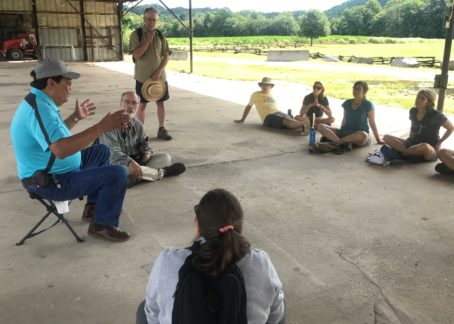
Tom Belt (above, seated at left of group):
Kituwah, Katuah – are American spellings of what is pronounced “Gadua” – which means “the dirt where we live that belongs to God.”
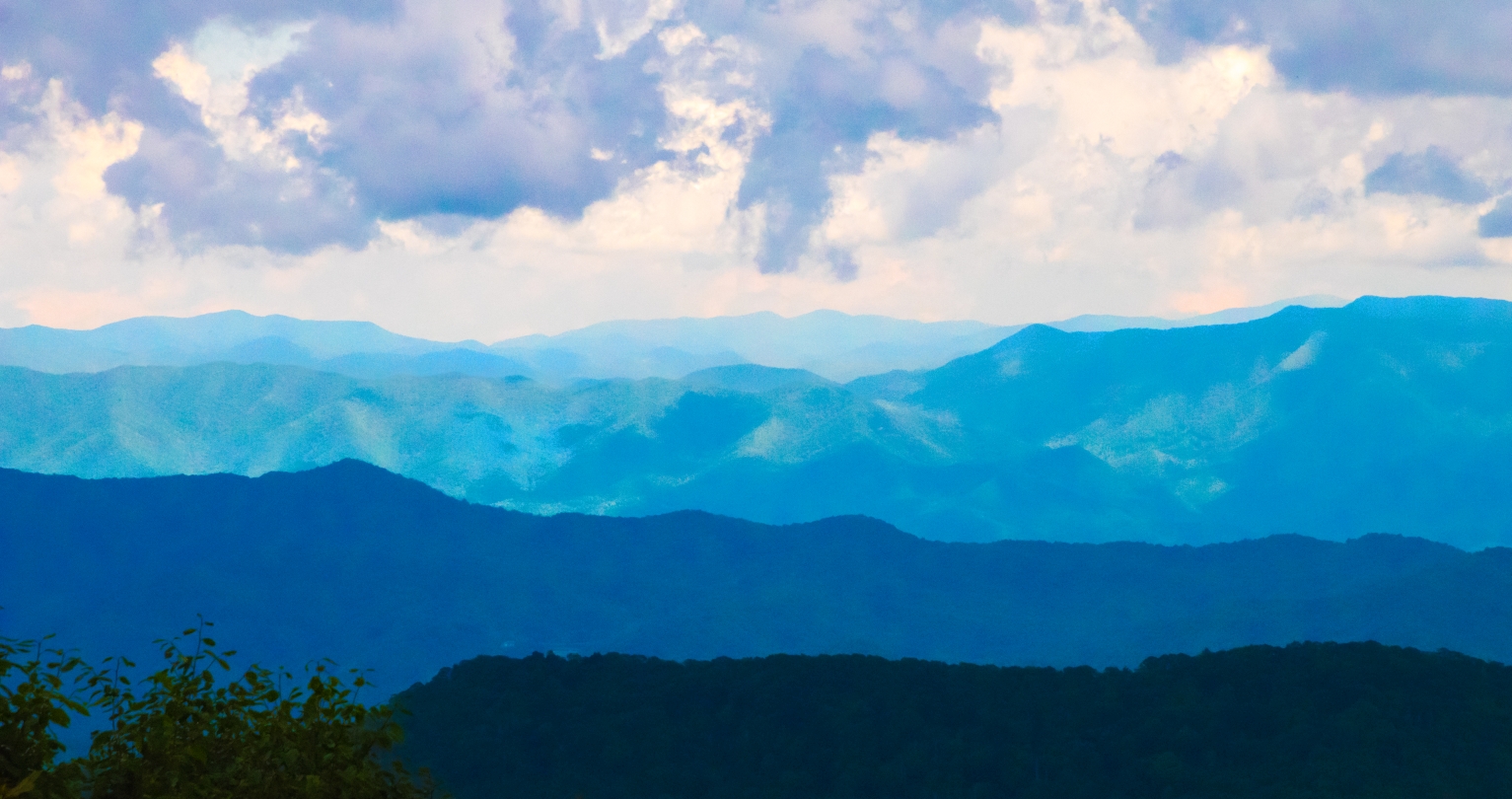
We would say we have always been here, at “Gadua.” Like your story of Moses receiving the law from the mountaintop, so we received the eternal flame and the laws from God, many more than 10 laws, from the top of the mountain now called Clingman’s Dome (which is the highest mountain in the Great Smoky Mountains and nearly tied with Mt. Mitchell — within 40 feet — as being the highest mountain east of the Mississippi River) From our mother town site, Kituwah, there is a direct view to the top of this mountain.
For us places are important, “we don’t have a cosmology, we have cosmography” – unlike the British settlers, we would not say “this looks a good place to build a town.” There is a reason why our town is located in a particular place. Places are intrinsically connected to making decisions for a reason. We all live downslope or downstream.
Why would you employ science without a conscience – why would you do that? Splitting atoms to make a big destructive power – we do not understand why you would do things “just because you can.” When we did things we considered reasons to justify them.
(KK note: This sounds much like the a law of the Iroquoian Confederacy “In our every deliberation, we must consider the impact of our decisions on the next seven generations.” The Cherokee language is part of the Iroquoian language group.)
“We know who we are. We are of the land, not, the land serves us.”
We celebrate those, like Red Bird Smith, who saw how important it was to keep our traditions alive. Our traditions are not just “a performance,” they are “ceremony.” Keeping traditions means knowing who you are, it means survival — “if you become like them [the conquerors] then you’re dead, you no longer exist.”
“The eternal flame has a broad and deep meaning and I cannot go into to all of that here – though it is not literally a flame, we keep a piece [coal] from the fire, so each new fire has a connection back to the original flame — the fire which goes on forever.”
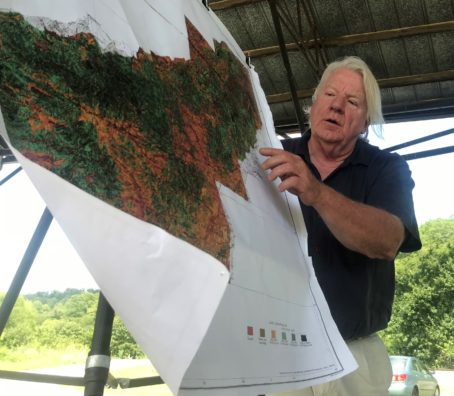
Tom Belt and Quentin Bass (above, with historic maps):
This forest does not look like it did when the Europeans first came, the Ferguson family had “a tree rounded out that they were keeping baby cows in” – QB: we know there were hollowed out American Chestnut trees 20 feet across at the base. TB: When Europeans got here, they think they saw an “untouched” landscape, but we had been stewarding that landscape, making it in optimal condition. When trees in the mountains here were cut, they took out so many logs that if laid end to end they would have circled the earth three times.
Tom Belt:
Large Native American cities like Cahokia were abandoned long before Europeans arrived. They say no one knows why, they ask what is “the reason,” was it a war or climate change? — when maybe it was a decision made for a reason, maybe it was decided the urban model was not a sustainable way to live, so it was abandoned.
You can’t cut out part of the whole, you can’t say take away just some of the birds, or just the insects. Losing any piece “will have a domino effect, and this place will look like the surface of Mars. They [our ancestors] knew that early on.”
“But what happens if only humans die? The water gets cleaner, the trees grow and the air gets clearer, the earth gets better, which leads us to the question – why are we here? Our purpose, that we have maintained for generations, answers this question — this is not just beautiful, quaint folklore, it’s science with a conscience.”
The English language is noun-based, the Cherokee language is verb-based. Everything in English begins with “I” – I this and I that — “I saw a bear over there.” In our language the bear comes first, “Bear over there that I saw.” Because in our way, the bear comes first, it belongs to the world that is more important than we are. And if I am telling you about the bear – you need to hear “bear” first, that is most important.” (laughing).
Referencing the idea of “we” – when 18th century British explorers wrote back to England about Native American towns and the people in them, he said “there were no paupers and no orphans in the Cherokee Nation.” (Cities with paupers and orphans were standard in Europe at that time.)
Cherokee culture is not analytical – Western culture may think our traditions and stories are “cute,” some kind of mythology. “We said trees have a memory – what we say is not cute, it’s true. Science is now proving what we said was true.”
We cut the trees, we have global warming, we are living in an unsustainable way. There is more to life than “scurrying around on errands – driving to Waynesville for this or that, or what I did today in Bryson City – in doing all these things we are killing all – in the service of what?”
“Today, we need to apply conscience – a new way of thinking. We need to remind people of who they are, and with knowing who you are comes responsibilities – when people ask what do we mean by sacred, this is what is sacred.”
Our way was “not based on conquest, it’s based on knowing who you are – we are the people of Kituwah (Gadua), people of the dirt that does not belong to us.”
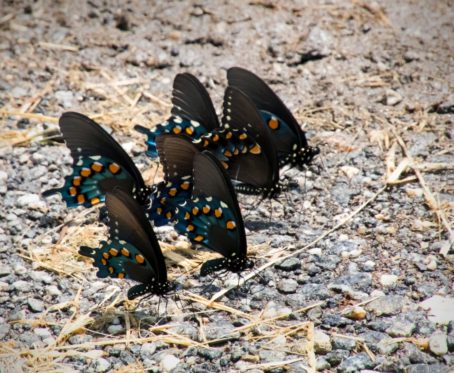
Top photo, Great Smoky Mountains view, and pipevine swallowtail butterflies at Kituwah (above) by Tony Thaxton Jr.